
Coconut oil for cooking is an everyday fat along much of India's coast, and a newer one in kitchens further inland. Can we cook in coconut oil? Yes, and for many dishes nothing else tastes right. The more useful question is which coconut oil, because the bottles on the shelf range from deeply fragrant to almost flavourless, and they suit different jobs.
This guide is strictly about the kitchen. It covers the types of coconut oil sold in India, where each belongs in Indian cooking, how it handles heat, why it turns solid and how to choose and store a bottle.
Virgin, refined and wood-pressed coconut oil
Three words do most of the work on coconut oil labels. They describe how the oil was made, and that decides how it tastes.
- Cold-pressed or virgin coconut oil: pressed from coconut without high heat or chemical refining. It keeps the aroma of coconut, from a light, milky sweetness to a fuller nutty note. Extra virgin is a label term some brands use for their least processed oil.
- Refined coconut oil, often called RBD: refined, bleached and deodorised, usually from dried coconut, known as copra. It is clear and almost neutral in smell and taste, and it takes higher heat.
- Wood-pressed coconut oil: pressed slowly in a wooden press, sold under names such as ghani or chekku oil. It is usually made from copra and has a toasty, more robust aroma.
Coconut oil vs refined oil, in the culinary sense, comes down to flavour. A refined vegetable oil or refined coconut oil is chosen for not tasting of much. A cold-pressed coconut oil is chosen because it does.
Fresh kernel or copra
The second thing to know is what the oil was pressed from. Copra is coconut kernel that has been dried in the sun or a kiln before pressing. Most coconut oil sold in India starts as copra. Oil can also be pressed from fresh, wet kernel, which gives a cleaner, milder, sweeter coconut aroma and a water-clear oil. Good labels say which.
Where coconut oil belongs in Indian cooking
Coastal kitchens, from Kerala and Karnataka to Goa and parts of Tamil Nadu, have cooked with coconut oil for generations. That is the best place to start.
- Tadka: heat coconut oil, add mustard seeds and let them splutter, then curry leaves and dried red chillies. Pour it over sambar, rasam, dal or a coconut chutney.
- Avial: mixed vegetables in a coconut and curd paste, finished with a spoonful of raw coconut oil and a few curry leaves stirred in off the heat.
- Thoran: finely chopped beans, cabbage or beetroot stir-fried with grated coconut, mustard seeds and curry leaves in coconut oil.
- Fish curry: many coastal fish curries are cooked in coconut oil, and it carries the tamarind or kokum and the spices well.
- Coconut rice and lemon rice: a tadka of mustard seeds, urad dal, chana dal and curry leaves in coconut oil, tossed through cooked rice.
- Appam: a few drops wiped around the appam pan before each one keeps the lacy edges from sticking.
- Banana chips: the classic Kerala snack is fried in coconut oil, which gives it its familiar taste.
If you are new to cooking with it, begin with a coconut chutney tadka or a simple thoran. The aroma is clearest when the oil is warmed gently with mustard seeds and curry leaves, and you will quickly learn which dishes you prefer it in.
Beyond regional cooking, coconut oil works as a swap for butter in baking. Use solid coconut oil in place of butter in roughly equal amounts in cookies, cakes and crumbles; a cold-pressed oil will add a gentle coconut note. It is also good in a vegetable or tofu stir-fry, where its aroma sits well with ginger, garlic and chilli.
“Choose cold-pressed when you want to taste the coconut, and a neutral oil when you do not.”
How coconut oil handles heat
Cold-pressed coconut oil suits tadka, sautéing, shallow-frying and baking over moderate heat. Around 175 °C is a commonly quoted smoke point for virgin coconut oil, which covers most stovetop cooking. If the oil starts to smoke heavily, the pan is too hot; turn it down. Refined coconut oil tolerates higher heat.
Deep-frying in cold-pressed coconut oil is possible, and some traditional snacks depend on it. It is also costly, because deep-frying takes a lot of oil, and the coconut aroma comes through in everything. Many cooks deep-fry in refined coconut oil or another neutral oil and keep the cold-pressed bottle for tadka and finishing.
Why coconut oil turns solid
Coconut oil turns solid below about 24 °C. On a winter morning in Delhi or in an air-conditioned kitchen, a bottle can turn white and firm; in a warm kitchen it stays clear and liquid. This is natural and does not mean the oil has gone off. It can switch back and forth between solid and liquid many times.
To re-liquefy it, stand the closed bottle in a bowl of warm water for a few minutes. Never microwave the bottle or set it on the stove. If you only need a spoonful, scoop it out solid and let it melt in the pan.
How to choose coconut oil for cooking
Start with the cooking you do most. If coconut oil is going into tadka, avial and chutneys, where you want to taste it, buy a cold-pressed oil and use it generously. If you mainly want a fat for frying that stays in the background, a refined oil will do the job for less. Then turn the bottle round and read the label.
- The source: fresh kernel or copra. The label should say which.
- The method: look for cold pressed or virgin if you want aroma.
- The ingredient line: one ingredient, coconut oil. Nothing else.
- No additives: no added flavour, colour or preservatives.
- A glass bottle: glass does not hold smells and lets you see the oil. A clear oil when liquid, white when set, is what you want.
- The packing date: buy fresh, and check the packing date as well as the best-before date.
- The FSSAI licence number: every packaged food sold in India must carry one.
How to store coconut oil
Keep the bottle tightly closed in a cool, dry cupboard, away from sunlight and the heat of the stove. It does not need refrigeration, which only makes it set hard. Use a clean, dry spoon if you scoop from a jar, because water and crumbs are what spoil oil. Fresh coconut oil smells of coconut; if it ever smells sour, sharp or stale, it has turned rancid and should be thrown away.
Our coconut oil
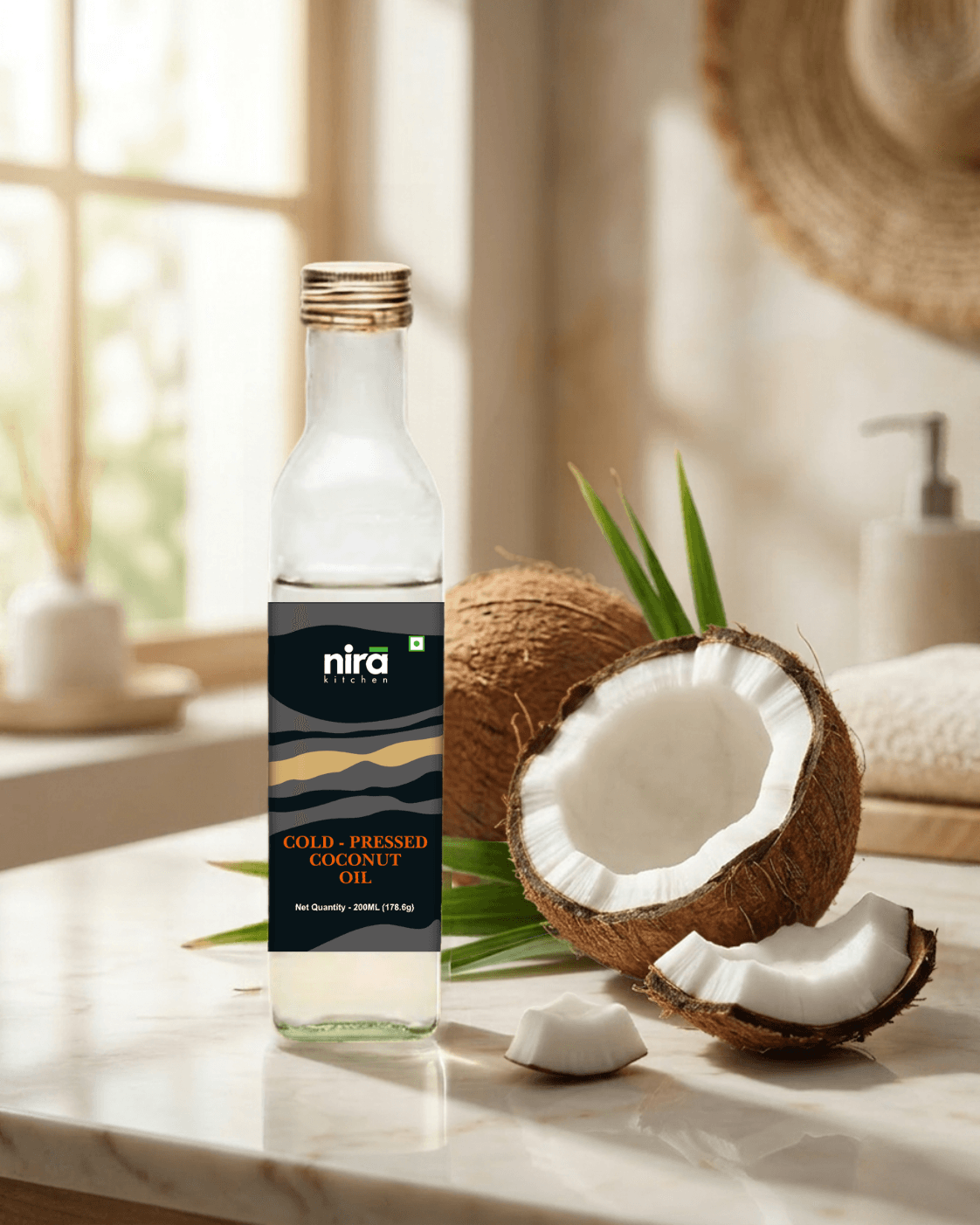
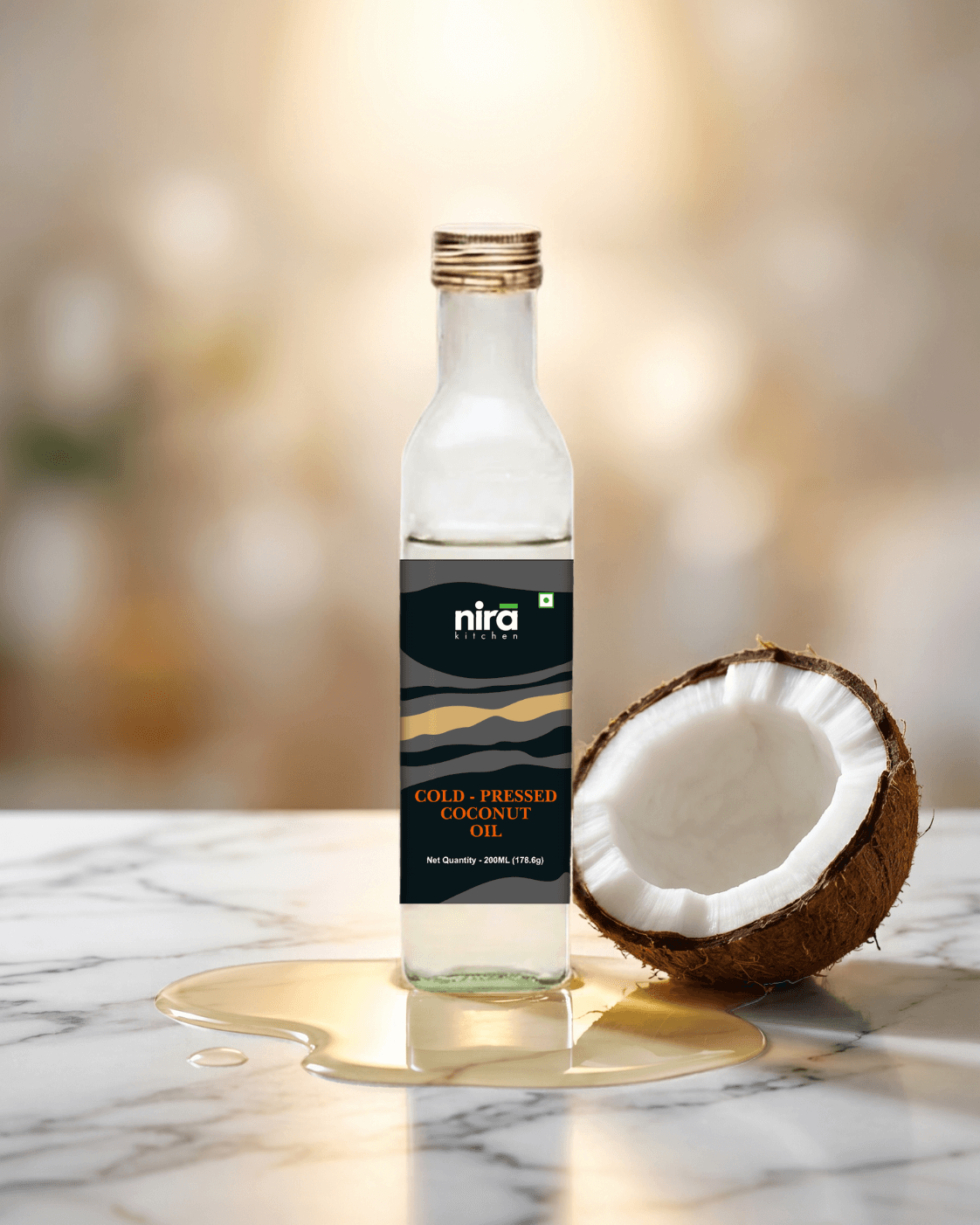
nira kitchen's coconut oil is cold pressed from fresh coconut kernel, not dried copra. No heat is used at any stage. The oil is gently filtered in a centrifuge, and nothing is added. The label calls it extra virgin cold-press coconut oil.
It comes in a 200 ml glass bottle, and its country of origin is India. A sample was lab-tested by EFRAC, an NABL-accredited laboratory. You will find the current price and full details on the product page.