
Olive oil for cooking is one of the most searched kitchen questions in India, and it usually comes with a worry attached: is olive oil good for Indian cooking at all? In the kitchen sense, yes. A good extra virgin olive oil can start a tadka, soften onions, roast vegetables, shallow-fry and finish a dal. The trick is knowing which bottle you are holding and where its flavour helps rather than gets in the way.
This guide walks through the grades sold in India, what each is for, how we use extra virgin olive oil in Indian dishes, and how to read a label and store a bottle.
Where olive oil comes from
Olive oil is pressed from the fruit of the olive tree, which grows best in a Mediterranean climate of hot, dry summers and mild winters. Spain is the world's largest producer, and the province of Jaén in Andalusia is its biggest olive-growing region.
India grows very little. There have been olive plantations in Rajasthan, but almost all the olive oil on Indian shelves is imported. The bottle has travelled a long way, so you want to know where it started and when.
The grades of olive oil sold in India
Walk down a supermarket aisle and you will see four or five words on olive oil bottles. They are not marketing variations of the same thing. They describe very different oils.
- Extra virgin olive oil: pressed from olives by mechanical means alone, with no chemical refining, and judged free of defects by taste. It must have a free acidity of no more than 0.8%. It tastes of the fruit: green, grassy, peppery or buttery depending on the olive and the harvest.
- Virgin olive oil: also unrefined, but with small flavour defects or higher acidity than extra virgin allows.
- Pure or classic olive oil: mostly refined olive oil, blended with a little virgin or extra virgin oil for some colour and flavour. Mild, inexpensive and fine for general cooking.
- Light or extra light olive oil: refined olive oil with very little flavour or colour. Light refers to taste, not to fat content.
- Olive pomace oil: made from the pulp and pits left after pressing. The remaining oil is extracted with a solvent and then refined. It is the cheapest grade and the most neutral in taste.
“Pomace oil and an early-harvest extra virgin oil share a name and very little else.”
Is extra virgin olive oil OK for cooking?
Many of us were told that extra virgin olive oil must never be heated, and that it is only for salads. In culinary terms that idea is outdated. In Spain, Italy and Greece, extra virgin olive oil is the everyday cooking fat, used for sautéing, roasting and frying.
The family behind the oil we sell, Cielo y Tierra in Jaén, cooks and fries with their own extra virgin oil, and their retail guide gives its smoke point as around 210 °C. That is comfortably above the heat of a normal sauté or shallow-fry. With any oil, if the pan starts to smoke, turn the flame down.
Heat does soften the flavour of a fine extra virgin oil. That is why many cooks use a good everyday bottle for the pan and save their best one for pouring over a finished dish. It is a matter of taste and budget, not a rule.
Can we use olive oil for tadka or deep frying?
For tadka, yes. Warm the oil until it shimmers, add cumin, mustard seeds, curry leaves, dried red chillies or a pinch of hing, and let them crackle as you would in ghee or any other oil. The spices bloom just the same. You will taste a little of the olive in the finished dal, which some families love and some do not.
Deep frying is possible too, and in Spain it is common to fry in extra virgin oil. In an Indian kitchen, though, a kadhai of puris or pakoras uses a lot of oil, and the cost of filling it with extra virgin olive oil is hard to justify. For deep frying, many cooks will prefer a neutral oil. Shallow-frying cutlets, tikkis or fish in olive oil is a different matter and works very well.
How we use extra virgin olive oil in Indian dishes
- Starting a tadka or a masala: heat it, bloom whole spices, then soften onions, ginger and garlic as usual.
- Roasting: toss cauliflower, potatoes, baingan or cubes of paneer in olive oil, salt and a little masala, and roast in a hot oven.
- Shallow-frying: tikkis, cutlets, cheela, or a piece of fish on a tawa.
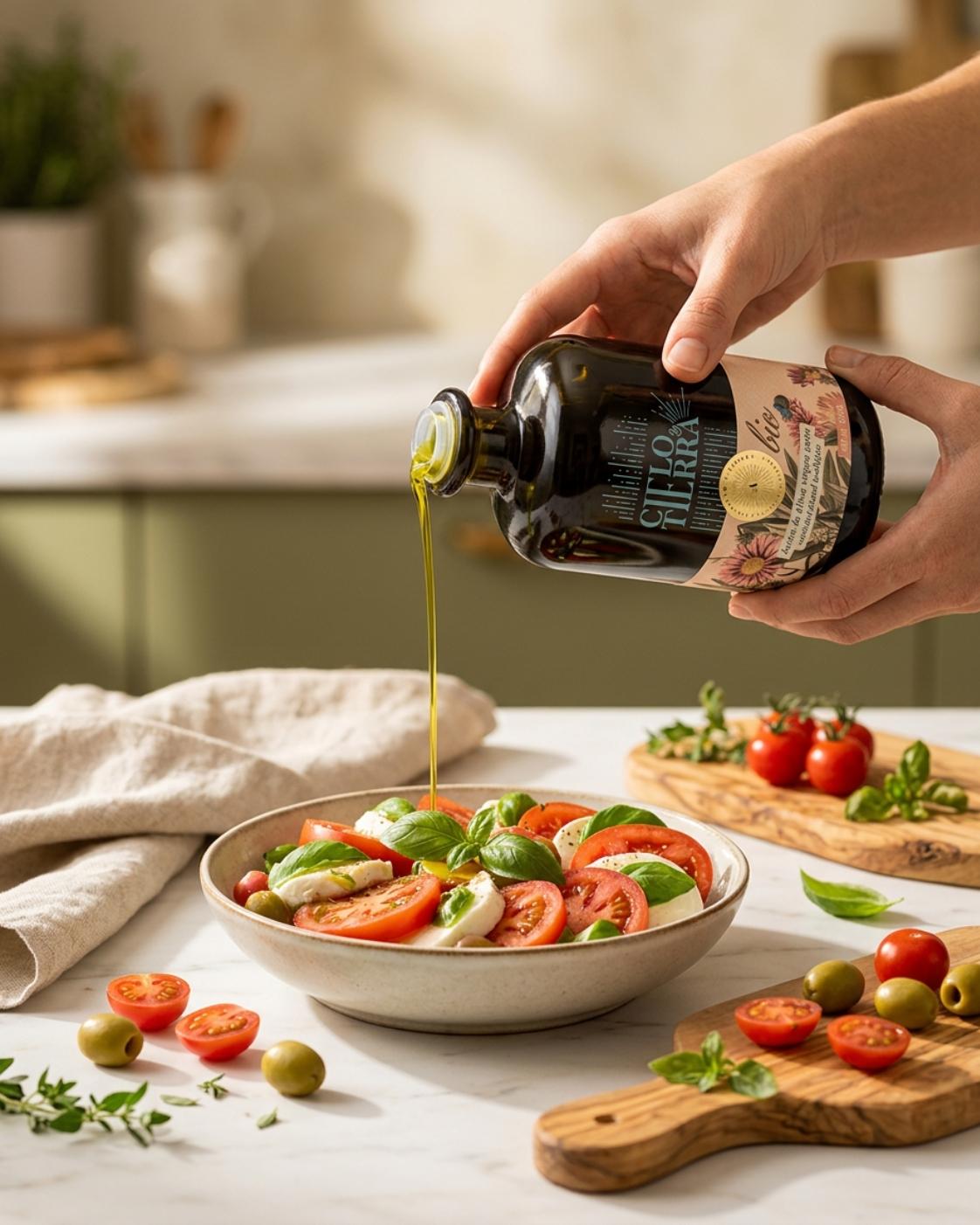
- Finishing: a thread over dal, raita, a chana chaat or a kachumber, where the fresh, peppery taste of the oil comes through raw.
- Baking: in place of other oils in savoury breads, focaccia or a simple cake, where a fruity oil adds its own character.
Where flavour matters, and where a neutral oil makes sense
Some Indian dishes are built on the taste of a specific fat. A Bengali jhol or a mustard-oil achaar depends on mustard oil, a halwa on ghee, and a Kerala fry on coconut oil. Swapping in olive oil changes the dish, and it will not taste the way you remember.
Extra virgin olive oil is happiest where its own fruity flavour is welcome, or at least not in conflict: roasted vegetables, salads, chaats, dal finished at the table, egg dishes, grilled paneer and anything with tomatoes and garlic. For deep frying and for dishes where you want the oil to disappear, a neutral oil, or a refined olive oil if you prefer, does the job.
What to look for on a bottle
- The words extra virgin. Anything else is a different grade, whatever the picture on the label suggests.
- A harvest date, not only a best-before date. Olive oil is at its freshest in the months after harvest, so a recent harvest is worth looking for.
- Acidity. Extra virgin oil must be 0.8% or below. Many careful producers state a figure well under that.
- Origin. A named country, region or estate is better than a vague blend. A PGI or PDO seal ties the oil to a defined place and set of rules.
- Dark glass or a tin. Light dulls olive oil, so clear bottles on a bright shelf are best avoided.
- A best-before date that leaves you time to finish the bottle.
Is organic extra virgin olive oil the best?
Organic tells you how the olives were grown: under certified organic farming rules, without synthetic pesticides or fertilisers. It does not, by itself, tell you how fresh the oil is, when the olives were picked or how carefully they were pressed. An organic oil can be superb, and so can a conventional one. Choose organic if it matters to you, and then judge it on the same label points as any other bottle.
How to store olive oil
- Keep it cool and dark, in a cupboard rather than on the counter.
- Keep it away from the stove. A bottle next to the gas loses its freshness much faster.
- Close the cap after each use, since air also dulls the oil.
- Use an opened bottle within a few months for the best flavour.
Do you need to refrigerate extra virgin olive oil after opening? No. In fact the fridge can make it cloudy and thick, and in a cold Delhi winter you may see the same thing in the cupboard. This is harmless. The oil clears again once it is back at room temperature.
Our olive oils
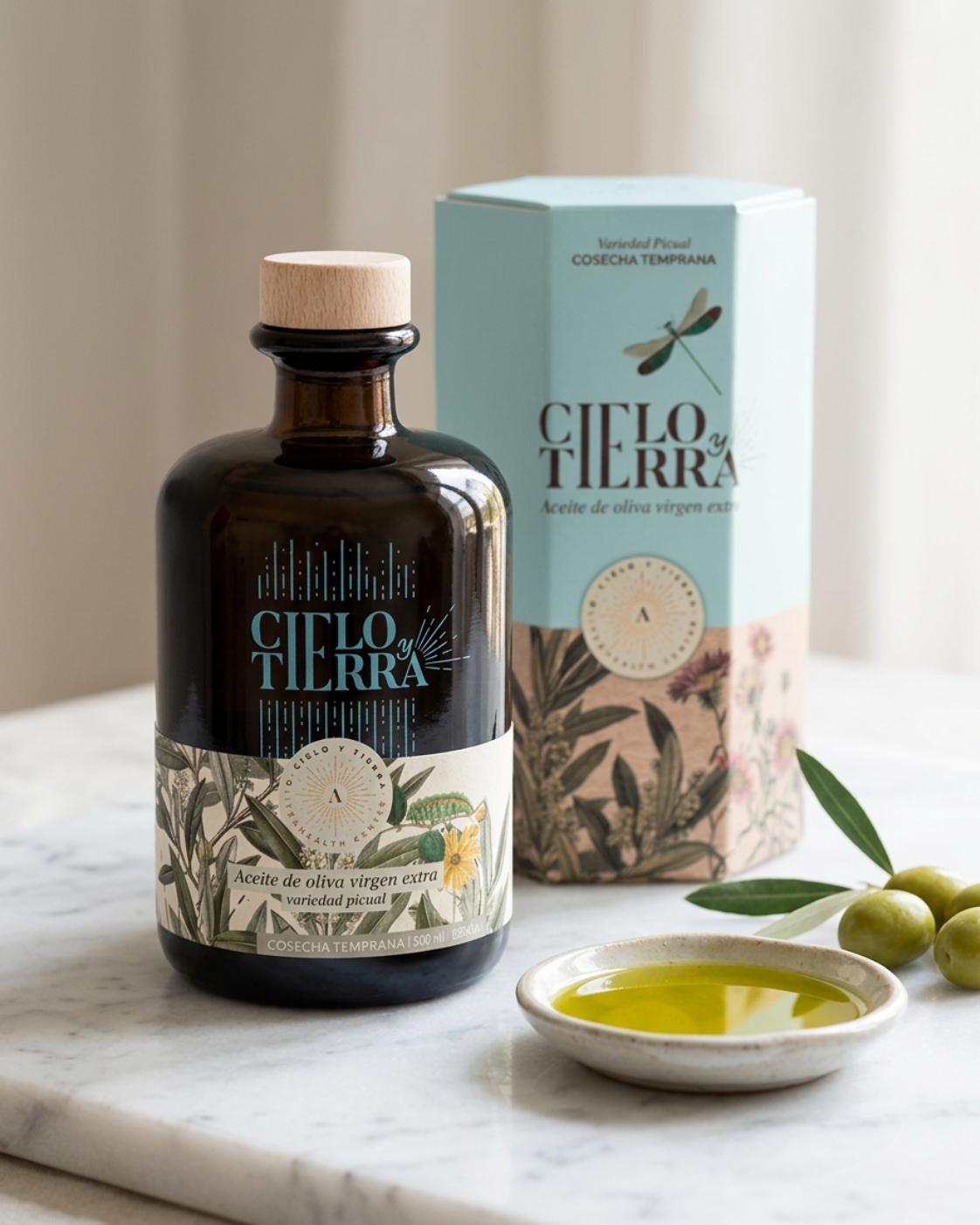
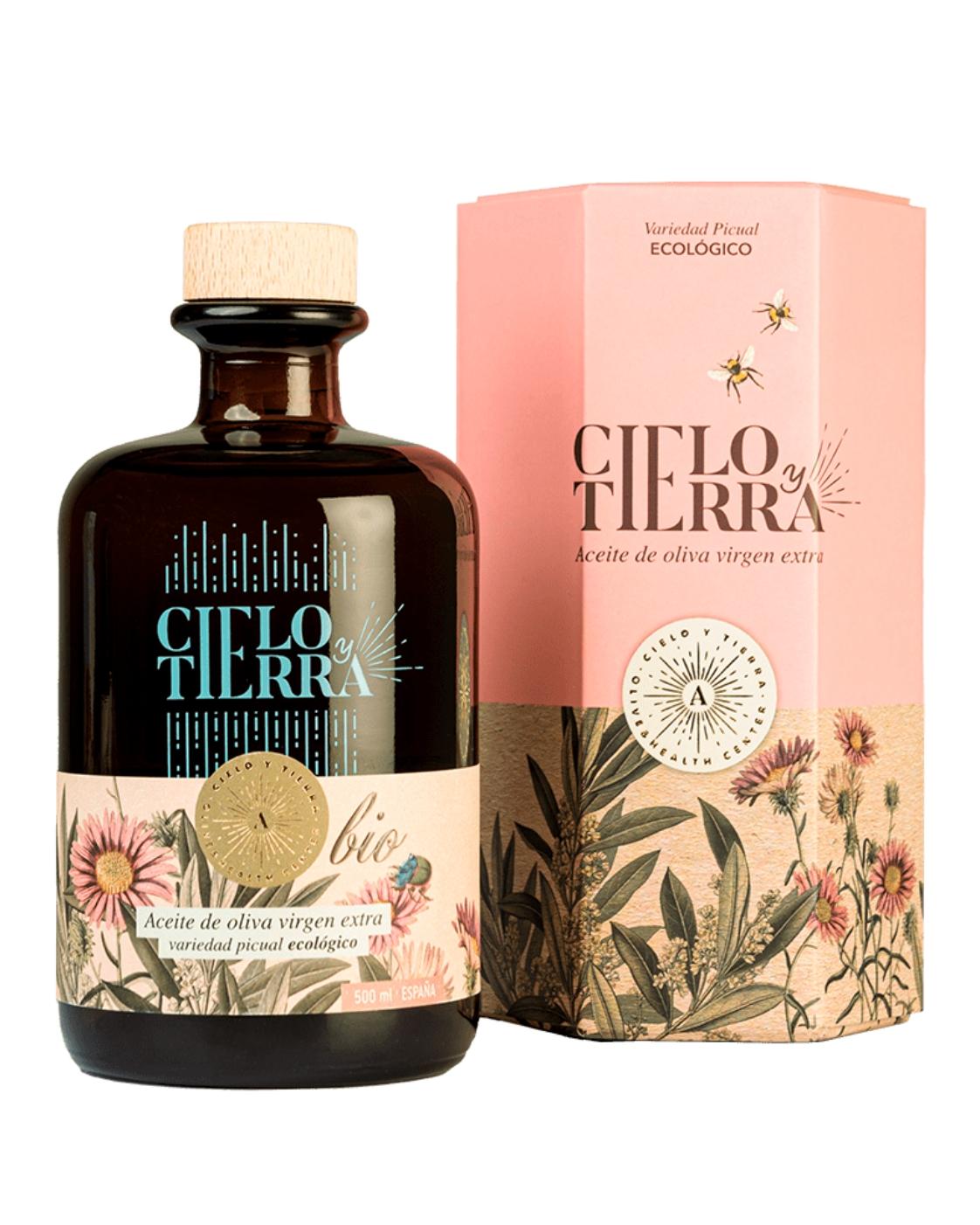
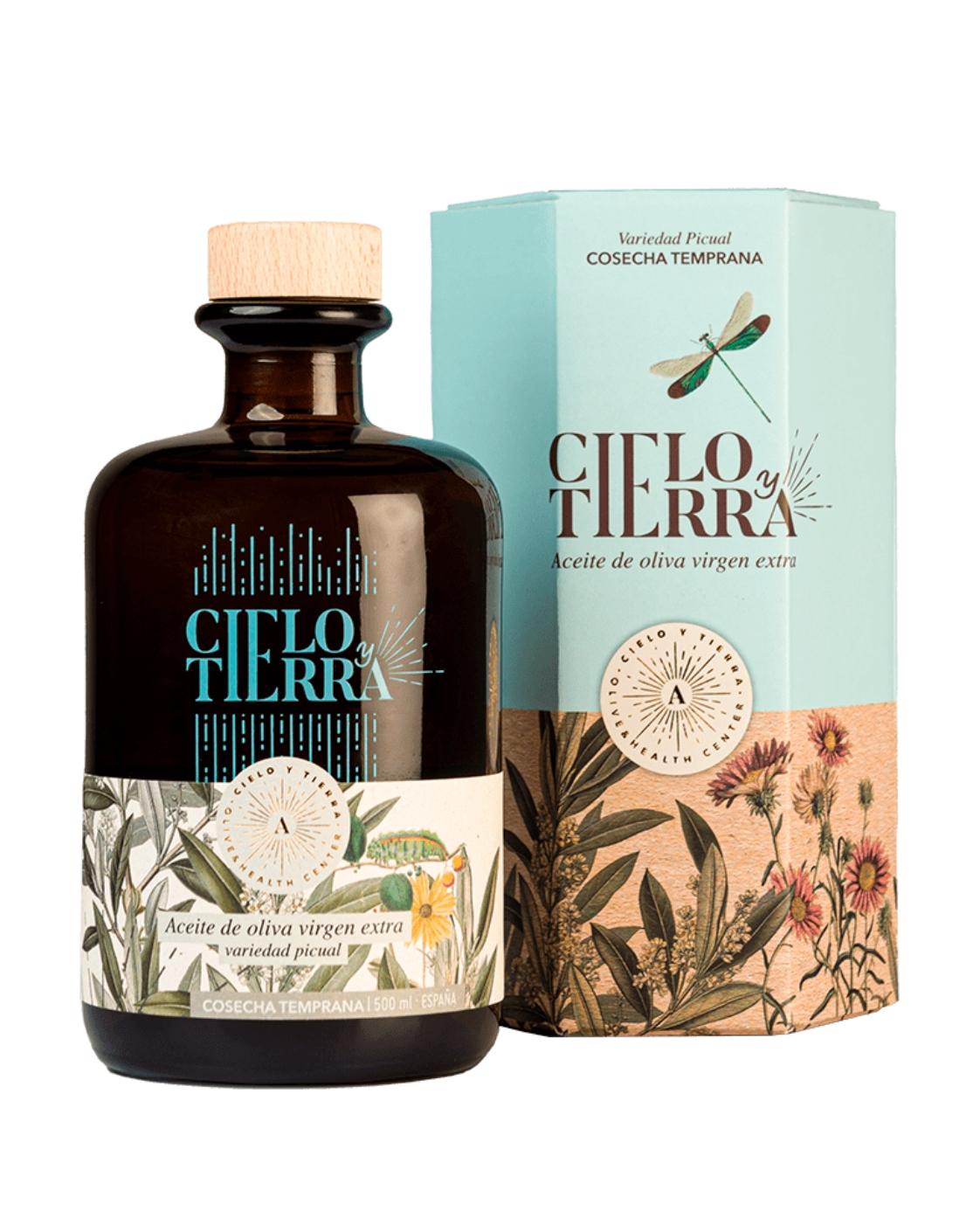
nira kitchen carries two extra virgin olive oils from Cielo y Tierra in Jaén, Spain.
The early-harvest oil is made from green Picual olives picked in the first two weeks of October on the family's Torres estate. The olives are cold-extracted at 20 °C within four hours of picking, and the oil has an acidity of 0.12%. It carries the PGI Aceite de Jaén seal with a numbered counter-label. It takes about 12 kg of olives to make a litre. On the official tasting panel it scored fruity 7.8, bitter 4.3 and pungent 4.3, which you will taste as a bright, green, peppery oil.
The organic oil comes from a certified-organic family farm in Pegalajar, Jaén, under EU organic code ES-ECO-028-AN. It is also made from green Picual olives picked in October and extracted at 20 °C within four hours, with an acidity of 0.12%. It is softer and sweeter, with low bitterness, which makes it an easy everyday oil for Indian cooking.
You will find current prices and full details on each product page. Whichever bottle you choose, the same rules hold: extra virgin on the label, a recent harvest, a named origin, a dark bottle and a cool cupboard away from the stove.