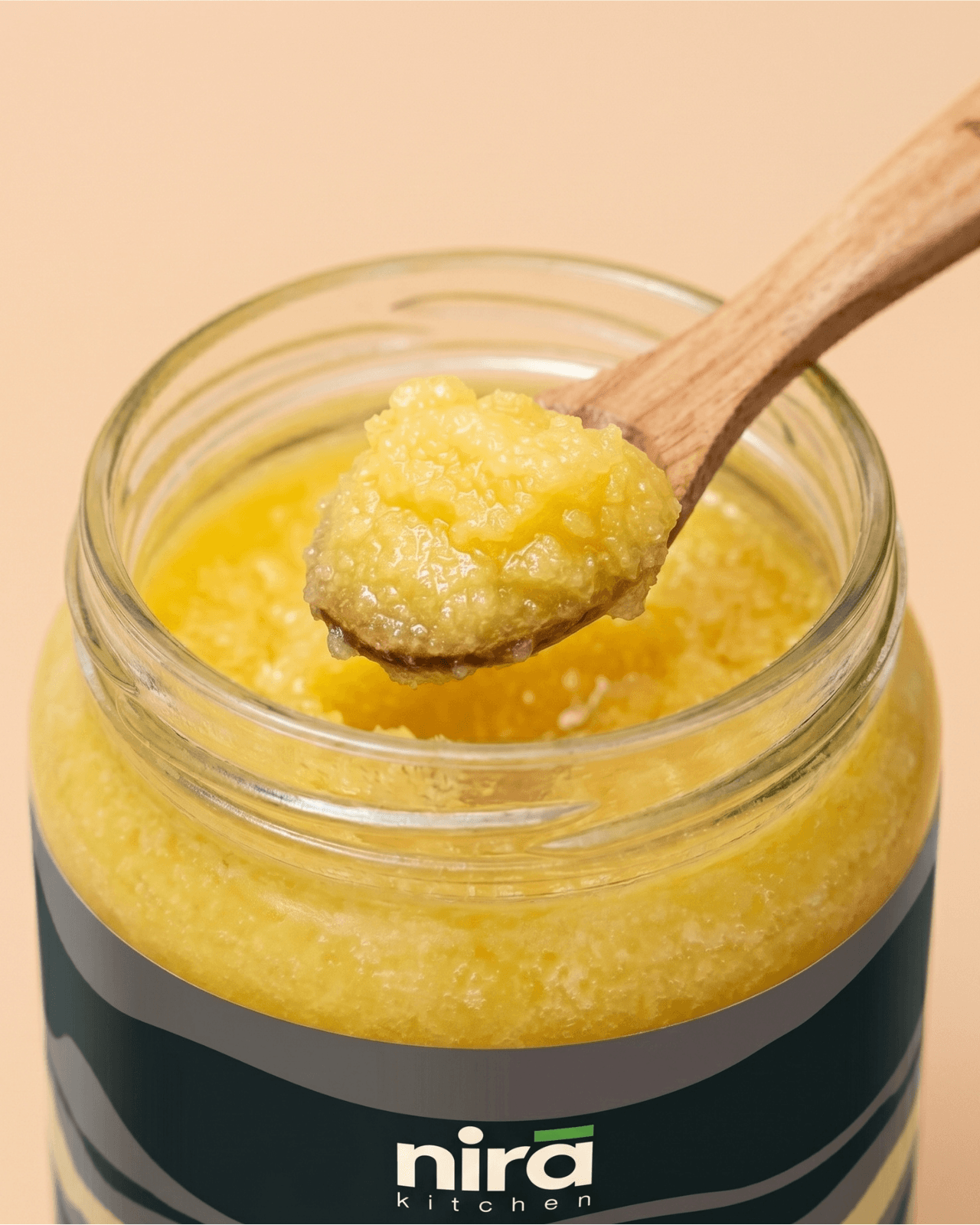

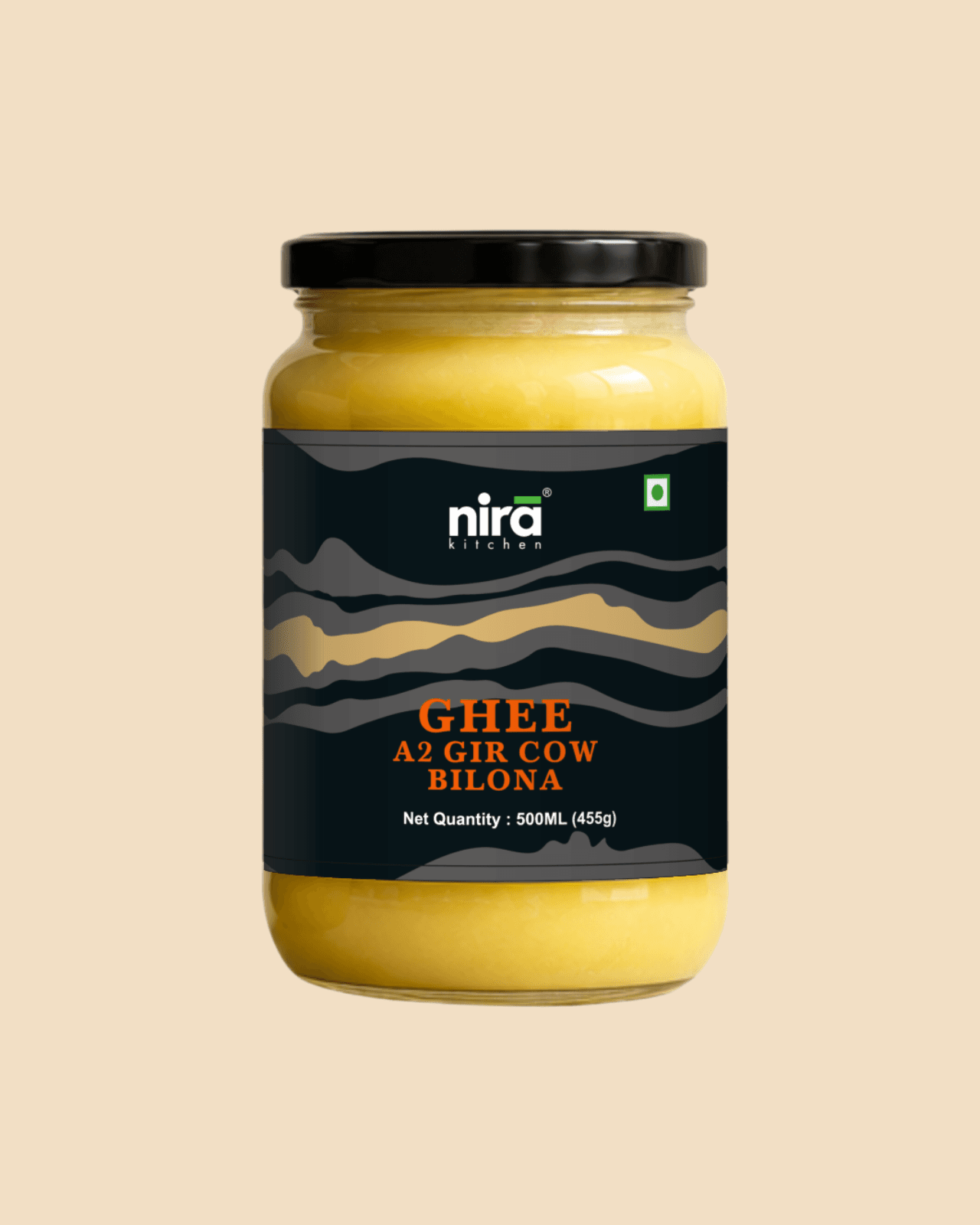
A2 ghee is ghee made from the milk of cows whose milk carries only the A2 type of a protein called beta-casein. In India, that usually means milk from native breeds such as Gir, Sahiwal, Red Sindhi or Tharparkar. The term describes the milk the ghee began as. Nothing more.
It is often sold alongside a second word, bilona, which describes something else entirely: the way the ghee was made. The two get blurred on labels all the time. This guide untangles them and sets out how we would choose a jar.
What A2 ghee means
Cow milk contains several proteins. One family of them, the caseins, includes beta-casein, which comes in more than one variant. The two most talked about are A1 and A2. They differ by a single amino acid at one position along the protein chain.
Which variant a cow produces depends on her genes, and so, broadly, on her breed. Many Indian native breeds, Gir among them, carry the A2 variant. Many breeds common in large commercial dairies around the world, such as the Holstein Friesian, typically produce a mix of A1 and A2.
So when a jar says A2, it is making a statement about where the milk came from. A good label will go further and name the breed, rather than leaving it at two characters.
A1 vs A2 ghee: the difference
In the kitchen, A1 and A2 ghee are both ghee: milk fat, slowly cooked until the water is gone and the milk solids have browned and been strained out. The difference between them lies upstream, in the source milk and therefore in the cows.
In practice, A2 ghee from a named native breed is usually made in smaller volumes, and often by a different method too, which is where bilona comes in. So the jars tend to differ in more than the letter on the label: in colour, in aroma, in texture and in price.
It also helps to know what A2 does not cover. Buffalo milk comes from a different animal altogether. A1 and A2 are a cow-breed distinction, so A2 on a jar of buffalo ghee does not quite make sense. Buffalo ghee also tends to be whiter, where cow ghee is more golden-yellow. If a jar says A2 but the ingredients say mixed milk, or do not say whose milk at all, ask before you buy.
Difference between A2 ghee and normal ghee
Most ghee on shop shelves is what people mean by normal ghee. It is usually made from cream, called malai, or from butter, separated from milk by machine and heated into ghee. The milk can be from cows of any breed, from buffaloes, or a mix. It is a quick and efficient process that gives a lot of ghee from a given amount of milk, and it is a perfectly legitimate way to make ghee.
A2 ghee narrows the milk to cows that produce A2 beta-casein. Bilona ghee changes the method. A jar that is both A2 and bilona has narrowed both.
- A2: describes the milk. It comes from cows that produce A2 beta-casein, usually a named Indian breed such as Gir.
- Bilona: describes the method. Curd is churned to butter, and the butter is simmered to ghee.
- Normal ghee: usually made from cream or butter separated by machine, from cow, buffalo or mixed milk.
A2 vs bilona ghee: milk vs method
These two words answer different questions. A2 answers which milk. Bilona answers how it was made. A ghee can be A2 without being bilona, and bilona without being A2.
Bilona is the old household method that many of us grew up watching. Whole milk is boiled, cooled and set into curd overnight. The curd is churned with a wooden churner, the bilona or madhani, until the butter, makkhan, separates from the buttermilk, chaas. The butter is then simmered slowly in a heavy pan until the water cooks off, the milk solids turn brown and settle, and clear golden ghee is left to be strained.
Because the butter comes from cultured curd rather than fresh cream, bilona ghee usually has a deeper, slightly tangy, nutty aroma, and it tends to set with a grainy texture.
“A2 tells you which milk. Bilona tells you how it was made. A good jar tells you both.”
Why A2 ghee is expensive
The price gap between a jar of A2 bilona ghee and ordinary ghee can be large, and most of it comes down to milk.
First, the cows. Native breeds such as Gir generally give less milk per cow than the high-yield breeds used in large commercial dairies, so the milk itself costs more.
Second, the method. Churning curd recovers far less butter than separating cream does, so each jar of bilona ghee needs a great deal more milk than a jar made from cream.
Third, the labour. Setting curd, churning and simmering in small pans is slow work done in small batches, and every step has to be watched. A batch that is rushed or scorched cannot be fixed.
None of this makes an expensive jar automatically good. It does explain why a genuine A2 bilona ghee cannot sell at the price of ordinary ghee, and why a suspiciously cheap one deserves a closer look.
How to identify pure A2 ghee
- One ingredient. The label should say cow milk ghee, or cow milk fat, and nothing else.
- The breed named. A2 on its own is two characters. Gir, Sahiwal or another named breed is a statement someone can be held to.
- The method stated. If it is bilona, the brand should say how the curd was set and churned.
- A lab report. Ask whether a sample was tested, and what for. A brand that has done the work will tell you.
- Texture when set. Bilona ghee usually sets with a grainy, danedar texture at room temperature, though texture also shifts with the weather.
- Aroma. Warm a spoonful. Good ghee smells nutty and lightly caramelised, like the brown bits at the bottom of the pan.
- The milk. Be wary of A2 on buffalo ghee or on ghee made from mixed milk.
A word on home tests. Tricks such as melting ghee in your palm or heating it with sugar are popular, and they can hint at crude adulteration. They cannot tell you whether the milk came from Gir cows. Only the label, the brand's sourcing and a lab test can do that.
Using A2 ghee in an Indian kitchen
Use it exactly as you would any good ghee. It shines most where you can taste it.
- Tadka: heat a spoonful until it shimmers, add cumin, mustard seeds, curry leaves or a pinch of hing, and pour it over dal.
- Sweets: halwa, laddoo, kheer and sheera all lean on ghee for their flavour.
- Rice and rotis: a little over hot rice and dal, stirred into khichdi, or brushed onto rotis and parathas straight off the tawa.
Because the milk solids have been cooked out, ghee takes heat well, which is why it has long been the fat of choice for blooming whole spices.
Storing ghee
Ghee does not need refrigeration. Keep it in a clean, airtight jar in a cool, dark cupboard, away from the stove. Always use a dry spoon. A drop of water or a crumb of food is what usually spoils a jar. It will soften in summer and set firmer in winter, which is normal.
Our ghee
nira kitchen's ghee is made from the A2 milk of grass-fed Gir cows in Gujarat. A partner dairy sets whole milk into cultured curd, hand-churns it by the bilona method, and simmers the butter into ghee. Nothing is added.
The A2 claim is backed by a test, and separately, a sample of the ghee was lab-tested by EFRAC, an NABL-accredited laboratory. You will find the current price and full details on the product page.