
Search for the olive oil price in India and the numbers barely line up. One litre of extra virgin olive oil costs ₹430, another 500 ml bottle costs more than ₹5,000, and a third calls itself pure and sits somewhere in between. All of these can be honest prices. Olive oil is sold in several grades, in bottles from 200 ml to 5 litres, and almost all of it has travelled from the Mediterranean to reach an Indian shelf.
This guide sets out what we found when we checked prices, what makes one litre cost more than another, and how to compare bottles so that you know what you are paying for.
What 1 litre of olive oil costs in India today
On 28 October 2026 we searched Google India for extra virgin olive oil, organic extra virgin olive oil and extra virgin olive oil for Indian cooking, and noted every listing that stated both a price and a pack size. We then divided each price by the litres in the pack. The per-litre figures below are our own arithmetic, not prices printed on any label.
- Everyday extra virgin olive oil from Indian grocery apps and marketplaces: across 17 listings, roughly ₹430 to ₹3,860 a litre. The median was about ₹1,040 a litre, and 12 of the 17 sat between ₹800 and ₹1,500.
- Organic extra virgin olive oil: across 8 listings, roughly ₹1,250 to ₹12,800 a litre. Two sold by Indian sellers came to about ₹1,250 and ₹1,880 a litre. Six imported bottles on specialist import sites came to about ₹5,700 to ₹12,800 a litre.
- Pure, classic and pomace olive oil: we found almost no listings that gave both a price and a pack size, so we cannot give you a fair range for these grades.
Read these numbers as a snapshot of one day rather than a rate card. Online prices move with discounts, festivals and stock, and the four cheapest extra virgin listings we saw were either large 2 litre and 5 litre packs or heavily discounted bottles.
If you are pricing a single bottle, the arithmetic is simple. At the median of about ₹1,040 a litre, a 500 ml bottle of everyday extra virgin oil works out to roughly ₹520.
Why extra virgin olive oil is expensive
Extra virgin is the top grade of olive oil. It is pressed from olives by mechanical means alone, it is not refined, and it has to pass both a laboratory test and a tasting panel. The other grades exist largely because that standard is hard to meet. Pure or classic olive oil is mostly refined oil with a little virgin oil added back, and pomace oil is extracted from the pulp left over after pressing. For a fuller walk through the grades, see our guide Olive Oil for Cooking: A Guide for the Indian Kitchen.
Refining lets a producer use olives that would never make the extra virgin grade, so refined oils can be made in bulk and sold for less. Extra virgin oil has no such shortcut. The fruit has to be sound, it has to reach the mill quickly, and the oil has to be kept away from heat, light and air at every stage.
What drives the price of a bottle
Once you are comparing extra virgin with extra virgin, the gap between bottles comes down to a handful of things.
Harvest timing. Olives change from green to purple to black as they ripen, and they hold more oil the longer they stay on the tree. Early-harvest oil is made from green olives picked at the start of the season. Each tree gives less oil, so a litre takes more fruit, and the oil tastes greener and more peppery. Producers charge more for it because they are trading quantity for character.
Origin and certification. A named estate or region costs more than an anonymous blend from several countries. A PGI or PDO seal ties an oil to a defined place and a set of production rules, with checks to match. Certified organic farming adds its own rules and inspections. Each of these adds cost, and each gives you something specific to hold the producer to.
The journey to India. Very little olive oil is made in India, so nearly every bottle here is imported. Import duty, sea freight, storage and distribution are all built into the shelf price. A bottle imported in small quantities by a specialist shop carries more of that cost per litre than oil shipped in bulk.
Bottle size and packaging. Small bottles nearly always cost more per litre. In the listings we checked, one brand's 250 ml bottle came to about ₹1,280 a litre against about ₹1,040 for its 1 litre bottle, and another's 250 ml came to about ₹1,400 a litre against about ₹1,310 for its 500 ml. Dark glass and tins cost more than clear plastic, and they also protect the oil from light.
“Compare olive oil by the litre, grade with grade, and harvest with harvest.”
How to compare olive oil prices fairly
- Work out the price per litre. Divide the price by the litres in the pack before you compare anything else. A 500 ml bottle at ₹600 is ₹1,200 a litre.
- Check the pack carefully. Pack of 3, 2 litres plus 200 ml free, or a 5 litre tin can all hide a very different per-litre price.
- Compare grade with grade. Extra virgin, pure and pomace are different oils, and only extra virgin should be priced against extra virgin.
- Look for a harvest date. A best-before date alone does not tell you how old the oil already is.
- Look for a stated acidity. Extra virgin must be 0.8% or below, and careful producers often print a much lower figure.
- Prefer dark glass or a tin. If two bottles cost the same per litre, the one that keeps out light is the better buy.
How much olive oil you actually use
Price per litre is the honest way to compare bottles, but it can make olive oil sound more costly than it feels in the kitchen. A tablespoon is about 15 ml, so a litre holds roughly 66 tablespoons.
At the median of about ₹1,040 a litre, a tablespoon works out to about ₹16. At ₹2,000 a litre it is about ₹30, and at ₹8,000 a litre about ₹120. These are our own sums, but they show where the money goes.
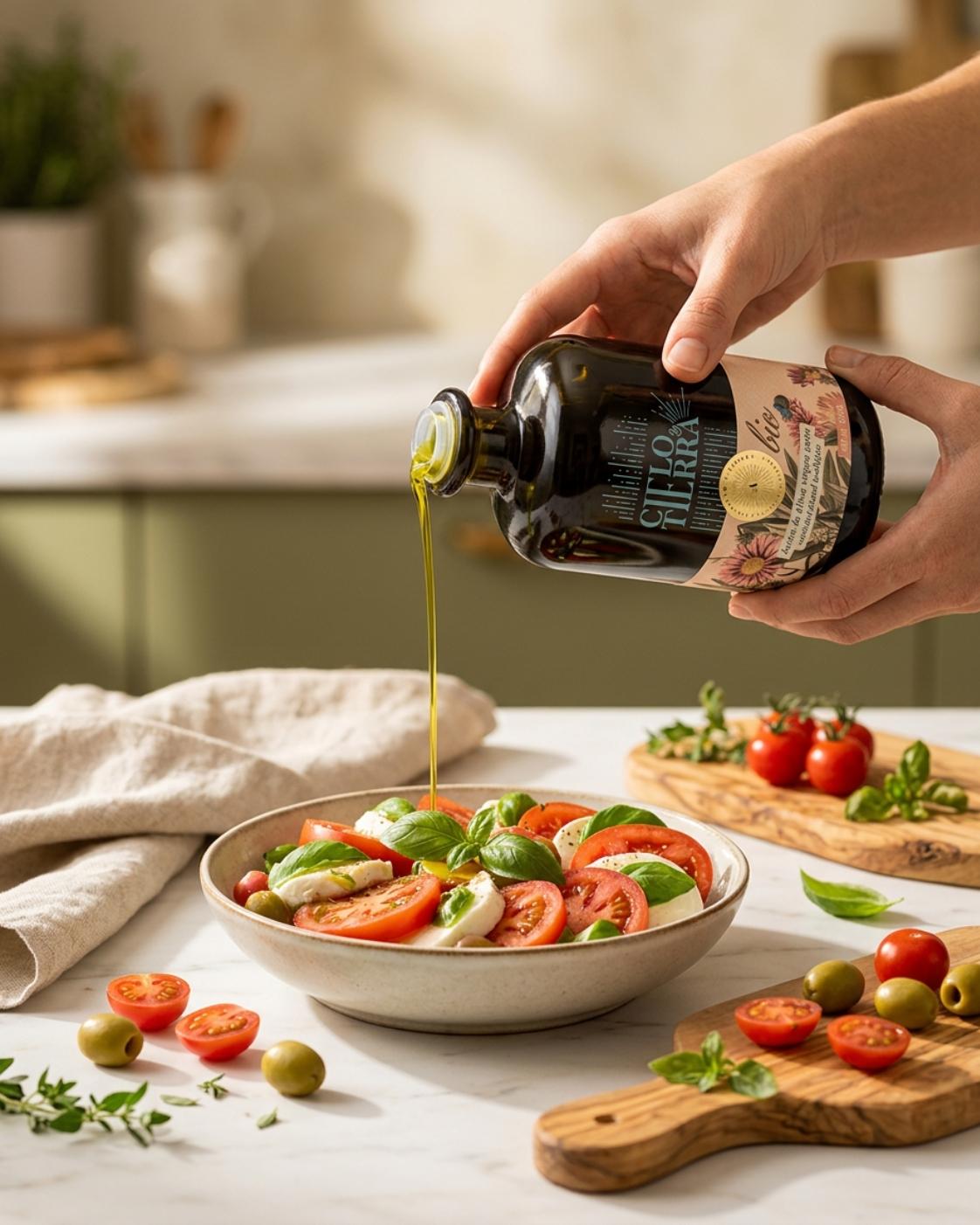
That is why many cooks keep two bottles. An everyday extra virgin oil goes into the pan, where heat softens its flavour and you use more of it. A finer, early-harvest bottle is kept for finishing: a teaspoon over dal, a thread over a chana chaat, a little on grilled paneer or a bowl of kachumber. Used a teaspoon at a time, even an expensive oil lasts a long while.
Storing a bottle so it does not go stale
Olive oil does not improve with age. Light, heat and air all dull it, and a bottle that tasted green and peppery in March can taste flat by December if it lives next to the stove.
- Keep it in a cool, dark cupboard, away from the gas and away from a sunny window.
- Close the cap after each use.
- Buy a size you will finish within a few months of opening. A 5 litre tin is only a bargain if you will get through it.
- If you buy in bulk, decant a small bottle for daily use and keep the tin sealed.
What we sell, and why
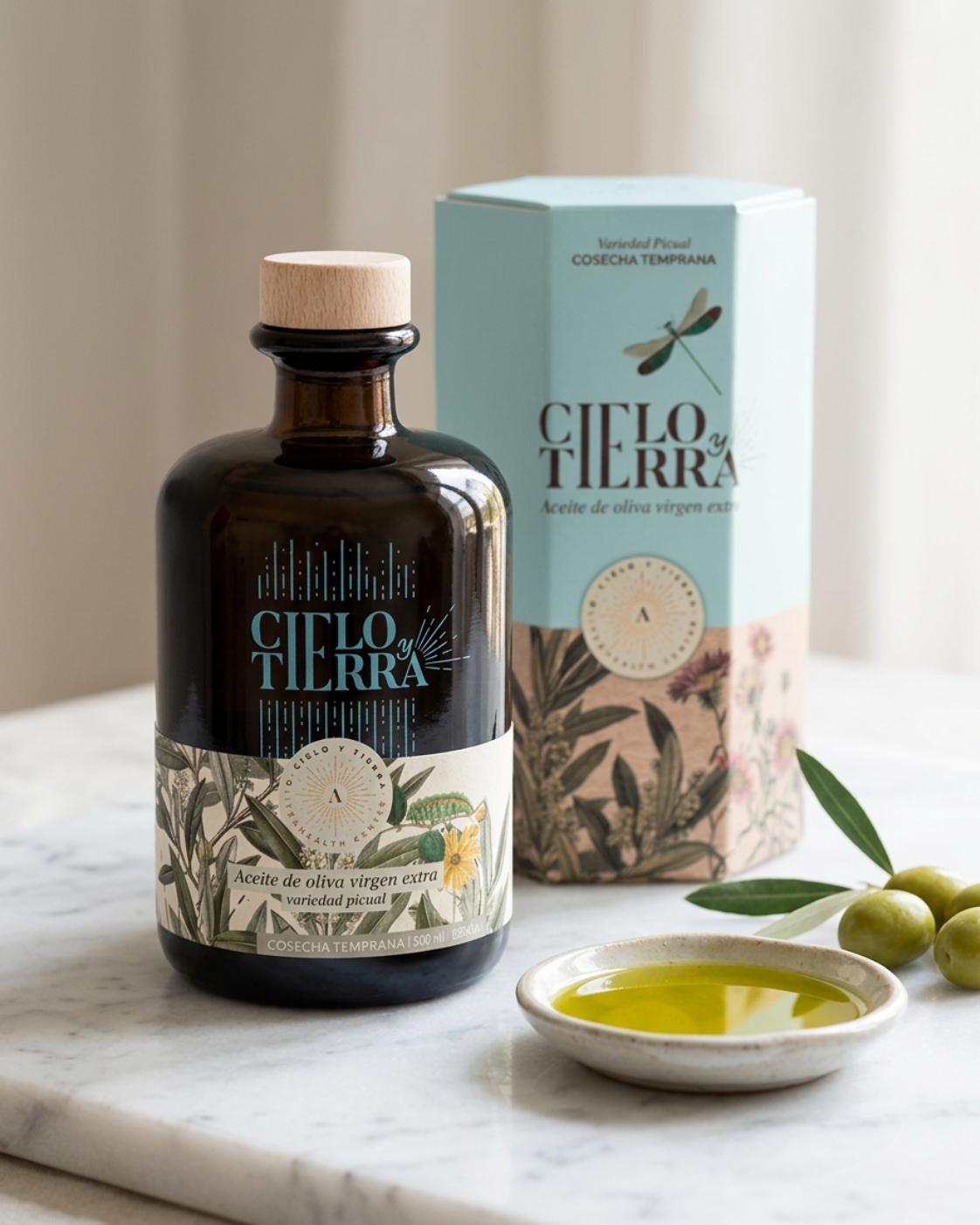
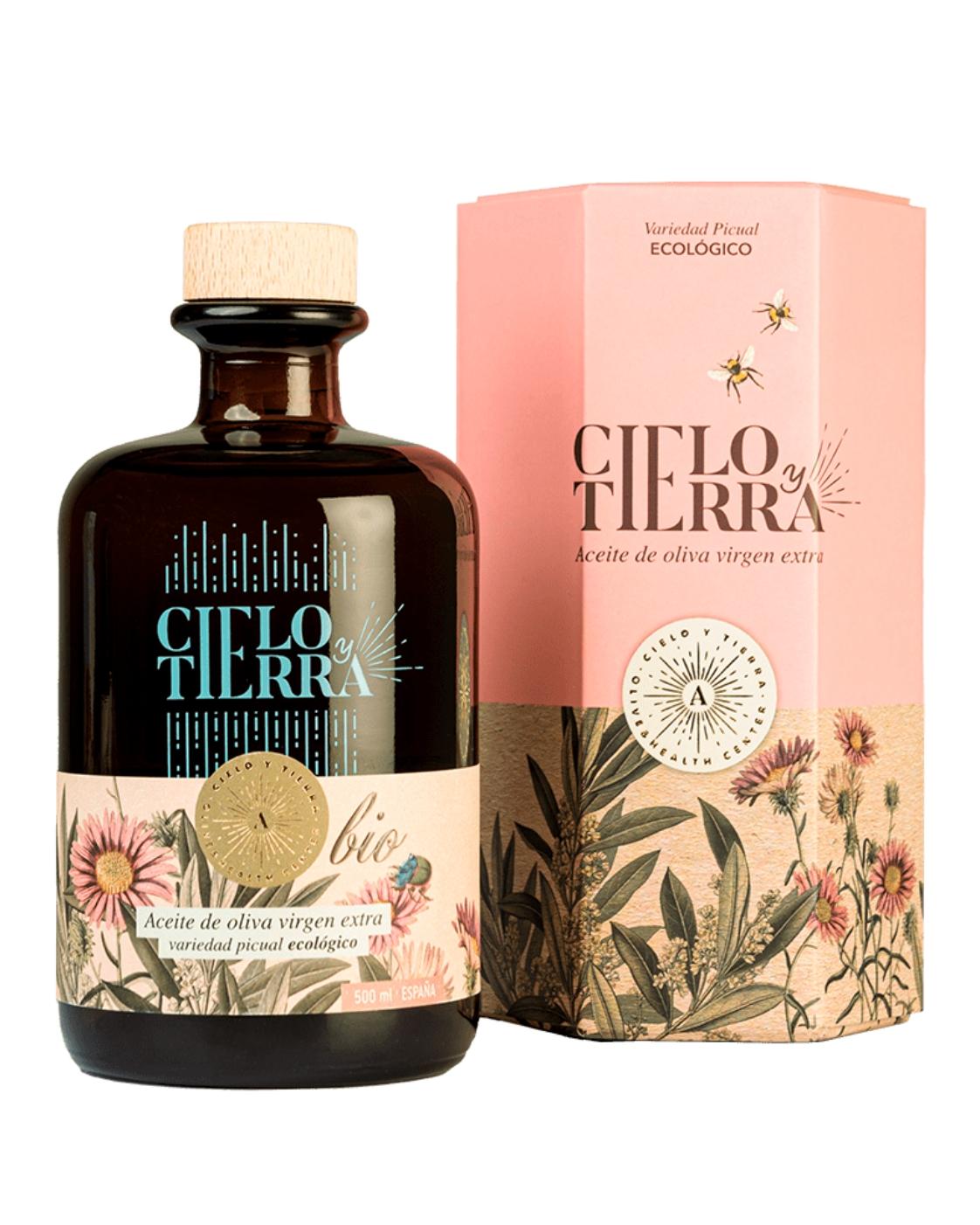
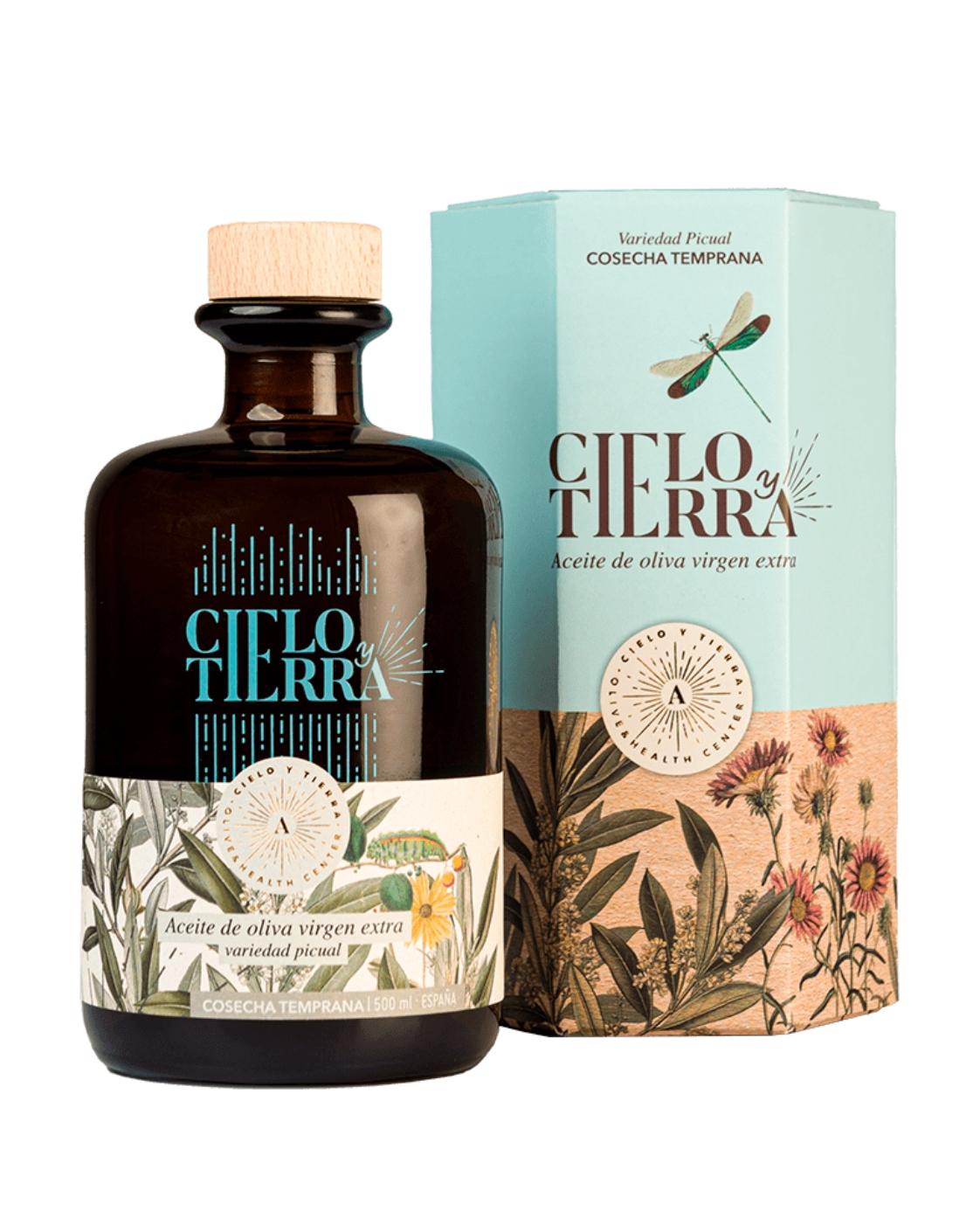
nira kitchen sells two extra virgin olive oils from Cielo y Tierra in Jaén, Spain.
The early-harvest oil is made from green Picual olives picked in the first two weeks of October on the family's Torres estate. The olives are cold-extracted at 20 °C within four hours of picking, and the oil has an acidity of 0.12%. It carries the PGI Aceite de Jaén seal with a numbered counter-label. It takes about 12 kg of olives to make a litre, which is the price of picking green.
The organic oil comes from a certified-organic family farm in Pegalajar, Jaén, under EU organic code ES-ECO-028-AN. Both oils come in 500 ml bottles.
We do not print our price here because prices change. See the current price on the product page, and double it to compare it per litre with anything else you are considering.
Whatever you buy, the method in this guide holds: price per litre, extra virgin on the label, a harvest date, a stated acidity, a named origin, a dark bottle and a cool cupboard.