

Ghee coffee is black coffee with a spoonful of ghee blended into it until the cup turns pale, frothy and creamy, a little like a latte without the milk. It has become a morning habit for many people in India, often searched for as black coffee with ghee.
This guide covers where the idea comes from, how to make a cup that tastes good rather than oily, a few variations, and an honest note on the benefits people claim for it.
Where ghee coffee comes from
Fat in a hot morning drink is an old idea. In the Himalaya, butter tea, made by churning strong tea with butter and salt, has been drunk for centuries. In the 2010s, a version made with coffee and butter became popular in the United States, usually called butter coffee.
Ghee coffee is the Indian kitchen's take on it. Ghee is a natural choice: it is already in the cupboard, it does not need the fridge, and its nutty, toasted flavour sits well with coffee. Because ghee is almost pure milk fat, it also leaves no milky film or curdled bits in a hot cup. Our guide to ghee vs butter explains why.
How to make ghee coffee
- Brew a cup of strong black coffee, about 200 to 250 ml, using a French press, a pour-over, a moka pot or good instant coffee.
- Add 1 teaspoon of ghee to start. Some people work up to 1 tablespoon, but start small.
- Blend for 15 to 20 seconds with a hand blender or a small milk frother, or shake it carefully in a sealed, heat-safe bottle, until the coffee is light and foamy.
- Drink it straight away, while the fat is still emulsified.
If you simply stir ghee into coffee, it melts and floats as a golden slick on top. That is the most common complaint about ghee coffee, and blending is the fix. Whipping the coffee and ghee together breaks the fat into tiny droplets that hang in the liquid, which is what makes the cup creamy and smooth.
“Stir it and you get an oily slick. Blend it for twenty seconds and you get something close to a latte.”
Getting the flavour right
- Use a darker roast. Chocolatey, nutty coffees match the toasted flavour of ghee better than bright, fruity ones.
- Use good ghee. In coffee there is nowhere for the ghee to hide, so a stale or neutral one tastes flat. Bilona ghee, made from cultured butter, brings a deeper, slightly tangy aroma. Our guide to the best ghee in India explains how to choose a jar.
- Add a pinch of salt if the coffee tastes bitter. It rounds out the flavour, as it does in butter tea.
- Keep sugar to taste. Many people find the ghee makes the cup taste sweeter and creamier, and need less.
Variations
- Cardamom ghee coffee: crush one green cardamom pod into the coffee before blending.
- Cinnamon or nutmeg: a small pinch of either, blended in.
- Jaggery: a little grated jaggery instead of sugar gives a caramel note.
- Iced: blend the hot coffee with ghee first, then pour over ice. Ghee added to cold coffee will set into flecks.
- With milk: ghee can be blended into a milky coffee too, though the effect is less noticeable.
- Without coffee: many families take a spoon of ghee in warm water or warm milk instead. Our guide to ghee with warm water covers both.
What a spoonful actually adds
Ghee is fat, and a teaspoon of it, about 5 grams, adds roughly 45 kcal to a cup of black coffee, which on its own has almost none. A tablespoon adds roughly 115 to 120 kcal. That is worth knowing if you are counting, and it is why we suggest starting with a teaspoon.
Many people say a cup of ghee coffee keeps them feeling full for longer through the morning, which is not surprising for a drink with fat in it. You will also see much bigger claims online. We do not make them: the evidence for them is thin, and a cup of coffee is, in the end, a cup of coffee. Drink it because you like it. Our guide to the benefits of ghee sets out what ghee does well.
If you have a medical condition, or have been told to watch your fat intake, ask your doctor before making it a daily habit.
Questions people ask about ghee coffee
- How do I make black coffee with ghee?
- Brew a cup of strong black coffee, add a teaspoon of ghee, and blend for 15 to 20 seconds with a hand blender or frother until it is pale and foamy. Drink it straight away. Stirring alone leaves an oily layer on top.
- How much ghee should I put in coffee?
- Start with 1 teaspoon in a 200 to 250 ml cup. Some people work up to a tablespoon. A teaspoon adds roughly 45 kcal; a tablespoon roughly 115 to 120 kcal.
- Does ghee coffee keep you full?
- Many people say it keeps them feeling full for longer through the morning, which is not surprising for a drink with fat in it. It also adds calories: about 45 kcal for a teaspoon of ghee. We make no claims beyond that.
- Can I put ghee in coffee with milk?
- Yes. Blend it in the same way. The ghee's flavour is less noticeable in a milky coffee, and the cup will be richer.
- Why does my ghee coffee taste oily?
- Because the ghee has not been blended. Melted ghee floats on coffee. Whipping it with a hand blender or frother for 15 to 20 seconds emulsifies it, which makes the cup creamy instead of oily.
Our ghee
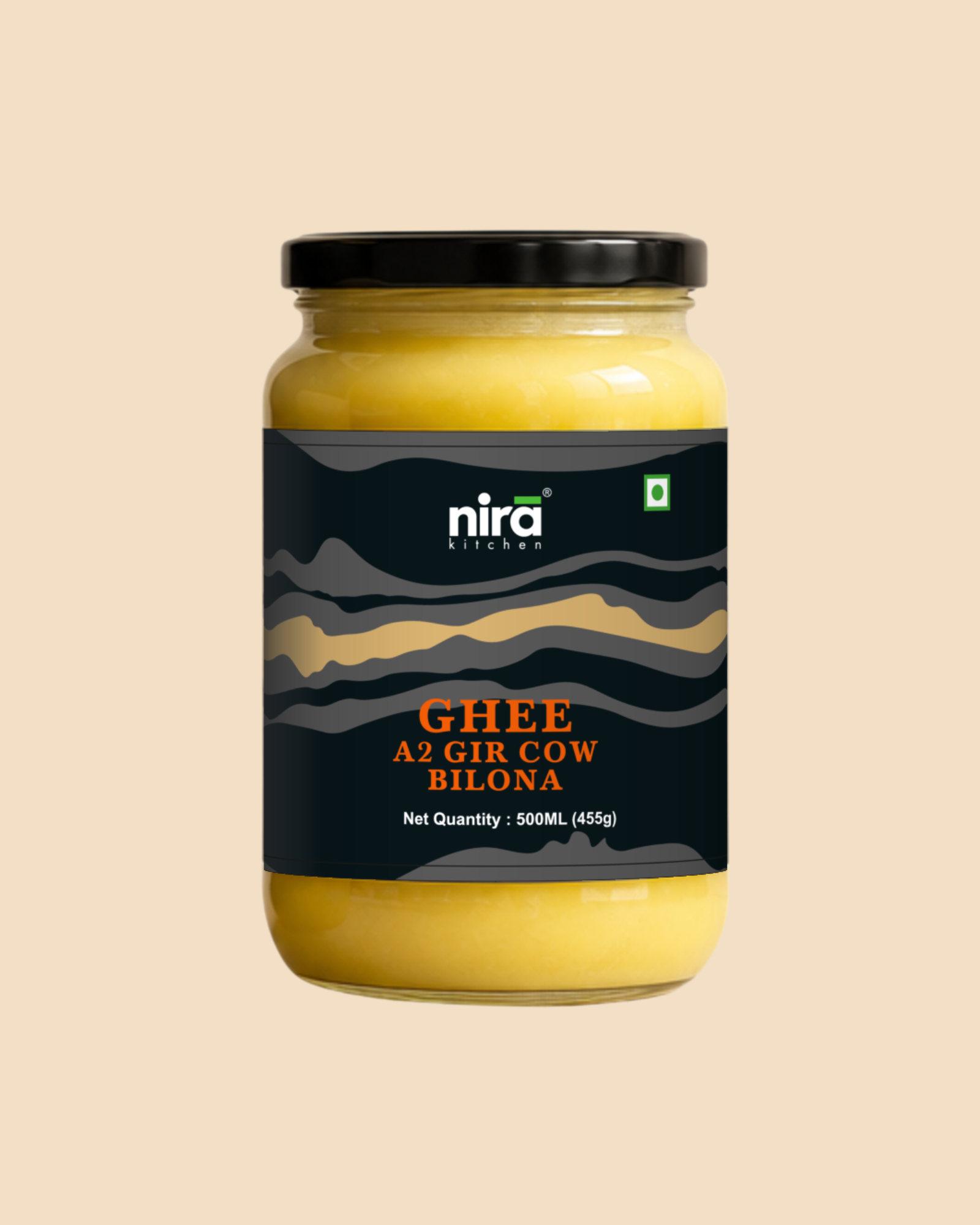
nira kitchen's A2 Gir cow bilona ghee is made in the Gir region of Gujarat from the milk of grass-fed Gir cows. A partner dairy sets whole milk into cultured curd, hand-churns it with a wooden bilona and slow-cooks the butter in small batches. Nothing is added. Made from cultured butter, it has a deep, nutty aroma that comes through clearly in a cup of coffee. The current price and batch are on the product page.