
Ghee is butter taken further. Butter is mostly milk fat, with some water and a little milk protein and sugar mixed through it. Cook that butter slowly, and the water bubbles away, the milk solids sink and turn brown, and what is strained off is almost pure milk fat with a nutty, toasted smell. That is ghee.
So the question is not really which is better. They are two stages of the same ingredient, and each does some jobs better than the other. This guide sets out what actually changes, and when we reach for which.
The short answer
- What it is. Butter is milk fat churned from cream or curd. Ghee is that butter simmered until the water is gone and the milk solids have browned and been strained out.
- Milk fat. Butter is about 80 to 82 per cent fat. Ghee is about 99.5 per cent or more.
- Water. Butter is about 15 to 17 per cent water. Ghee has almost none.
- Heat. Butter browns and burns quickly. Ghee takes high heat well.
- Flavour. Butter tastes fresh, creamy and milky. Ghee tastes nutty, toasted and caramel-like.
- Storage. Butter lives in the fridge. Ghee keeps in a cool cupboard, in an airtight jar, with a dry spoon.
What happens when butter becomes ghee
Put butter in a heavy pan over a low flame and three things happen in order. First it melts and foams as the water starts to boil off. Then the foam settles and the bubbling slows as the last of the water goes. Finally, the milk solids that have sunk to the bottom begin to turn golden, then brown, and the kitchen fills with a smell like toasted nuts or biscuits.
Strain the fat off those browned solids and you have ghee. In Indian homes the browned bits left in the pan, sometimes called khurchan or ghee residue, rarely go to waste: they are stirred into atta for parathas or mixed with sugar and eaten by the spoonful.
How the butter was made matters too. Most butter, and most ghee, starts from cream. Bilona ghee starts from butter churned out of cultured curd, which gives it a deeper aroma and a slight tang. Our guide to bilona ghee walks through that method step by step.
Ghee vs clarified butter
In English the two are often used as synonyms, and our guide to ghee in English covers why. Strictly, they stop at different points. Clarified butter, as used in French kitchens, is butter melted until the water is gone and the milk solids are skimmed or strained off before they colour. It is clean and neutral.
Ghee keeps cooking past that point, until the solids brown. That browning is where its flavour comes from. Clarified butter tastes of butter. Ghee tastes of browned butter.
“Clarified butter stops before the milk solids colour. Ghee waits until they brown. That wait is the flavour.”
Smoke point: why ghee takes heat better
Butter burns early because of its milk solids. The proteins and milk sugar scorch at relatively low temperatures, commonly cited at around 150 to 175°C, which is why butter in a hot pan goes from golden to black so quickly.
Ghee has had those solids removed, so it can be heated much further before it smokes; figures of around 230 to 250°C are often quoted, though the exact point varies with the ghee. That is why ghee is the fat of choice for a tadka, for frying puris and for searing, and why butter usually goes in at the end of cooking, or with a splash of oil to protect it.
Flavour and texture
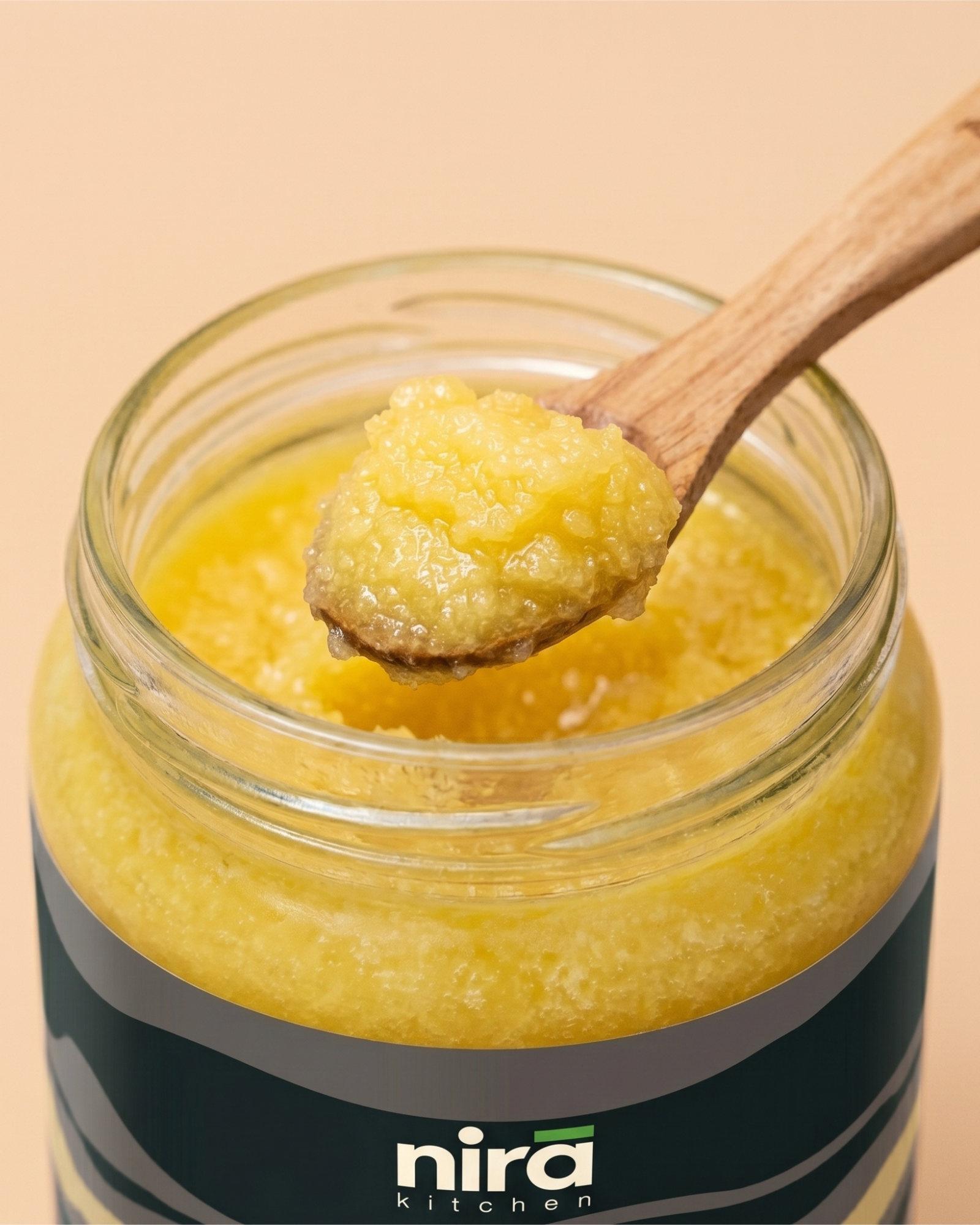
Butter tastes fresh, creamy and milky, and it is soft enough to spread straight from the fridge after a few minutes. Ghee tastes nutty and toasted, with a richer aroma when warm. At room temperature it is soft and spoonable, and good ghee often sets grainy, or danedar, especially in winter.
Because the water is gone, ghee also carries flavour differently. Whole spices bloomed in hot ghee release their aroma into the fat, and that fat coats every grain of rice or lentil. That is the whole idea of a tadka.
Shelf life and storage
Water and milk solids are what let butter spoil, so butter lives in the fridge and is best used within weeks once opened. Ghee has almost none of either. Kept in a clean, airtight jar in a cool cupboard, away from the stove, it keeps for months without refrigeration. The rule is a dry spoon, every time: a drop of water or a crumb of food is what usually spoils a jar.
Calories and fat
Both are fats, and neither is a light ingredient. Gram for gram, ghee has a little more fat and energy than butter, simply because butter is about a sixth water. A tablespoon of ghee, about 13 grams, comes to roughly 115 to 120 kcal; a tablespoon of butter, about 14 grams, is roughly 100 kcal. In practice the difference is smaller than the difference in how much of either you pour.
Because most of the milk solids are strained out, ghee contains only traces of lactose and milk protein. Traces are not zero, so anyone avoiding dairy for medical reasons should ask their doctor rather than assume ghee is safe for them.
When to use ghee, and when to use butter
- Use ghee for tadka, for frying and shallow-frying, for parathas and dosas on a hot tawa, for halwa and laddoo, and for anything cooked over a high flame.
- Use ghee where you want its nutty flavour to show: over dal and rice, stirred into khichdi, brushed on hot rotis.
- Use butter where you want fresh, creamy flavour: on toast, in a pan sauce finished off the heat, in mashed potatoes.
- Use butter in baking that relies on its water and solids, such as flaky pastry, many cakes and cookies. Ghee can stand in, but the texture will change.
Swapping one for the other
Ghee can replace butter in most cooking one for one. In baking, use a little less, roughly three-quarters to four-fifths the weight of butter, and add a spoonful of water or milk if the dough seems dry, because ghee brings fat without butter's water. Expect a slightly denser, richer crumb and a toasted flavour.
Going the other way, butter can replace ghee in most dishes that are not cooked hot. For a tadka or for frying, butter will brown and may burn before the spices are ready; if you must, add a little oil to the pan with it.
Questions people ask about ghee and butter
- Is ghee the same as butter?
- No. Ghee is made from butter. The butter is cooked slowly until its water evaporates and its milk solids brown, and the clear fat is strained off. The result is almost pure milk fat with a nutty flavour, a higher smoke point and a much longer shelf life than butter.
- Is ghee better than butter?
- For high-heat cooking and for keeping out of the fridge, yes: ghee takes more heat and lasts longer. For fresh, creamy flavour and many baked goods, butter is the better choice. They are the same fat at different stages, so the right one depends on the dish.
- What is the difference between ghee and clarified butter?
- Clarified butter is strained before its milk solids colour, so it tastes clean and neutral. Ghee is cooked longer, until the solids brown, which gives it a nutty, toasted flavour. Many English recipes use the two words interchangeably.
- Does ghee have more calories than butter?
- Slightly, gram for gram, because butter is about a sixth water and ghee has almost none. A tablespoon of ghee is roughly 115 to 120 kcal, against roughly 100 kcal for a tablespoon of butter.
- Can I use ghee instead of butter in baking?
- Yes, in many recipes. Use about three-quarters to four-fifths the weight of butter, and add a little liquid if the dough is dry. The crumb will be slightly denser and richer, and flaky pastry will not rise the same way.
Our ghee
nira kitchen's A2 Gir cow bilona ghee is made in the Gir region of Gujarat from the milk of grass-fed Gir cows. A partner dairy sets whole milk into cultured curd, hand-churns it with a wooden bilona and slow-cooks the butter in small batches. Nothing is added. It comes in 500 ml and 1 litre glass jars. The current price and batch are on the product page.